.png)
Business Insurance: What Security Do I Need to Be Covered?

Many businesses assume that once they have insurance in place, they’re protected.
But what often gets overlooked is the relationship between business insurance and security — and how one directly affects the other.
In reality, insurers increasingly expect businesses to demonstrate that reasonable security measures are in place before providing cover, approving claims, or offering competitive premiums.
And as commercial risks continue to evolve across the UK, those expectations are becoming more sophisticated.
For businesses, this creates an important question:
What security do you actually need to remain properly covered?
The answer depends on your premises, your operation, your insurer, and your level of risk exposure — but there are several consistent themes that businesses should understand.
Why Insurers Care About Security
Insurance providers assess risk for a living.
The more vulnerable a property appears, the higher the likelihood of:
Theft
Vandalism
Unauthorised access
Operational disruption
Insurance claims
From an insurer’s perspective, effective security reduces both the chance and severity of an incident.
This is why security measures increasingly form part of wider business insurance requirements.
It’s no longer simply about having a lock on the door. Insurers want to know that businesses are taking reasonable, proactive steps to protect their premises, staff, equipment, and assets.
Security Measures That Commonly Affect Business Insurance
The exact requirements vary between insurers and industries, but certain security systems are now widely viewed as standard expectations within modern commercial environments.
Intruder alarms remain one of the most common requirements, particularly for businesses storing valuable stock, equipment, or sensitive materials. In many cases, insurers may specify that alarm systems must be professionally installed, maintained, and monitored to meet policy conditions.
CCTV systems also play a growing role in security business insurance considerations. Modern surveillance systems not only act as deterrents, but also provide evidence, incident verification, and improved response capability. For insurers, this reduces uncertainty when claims occur.
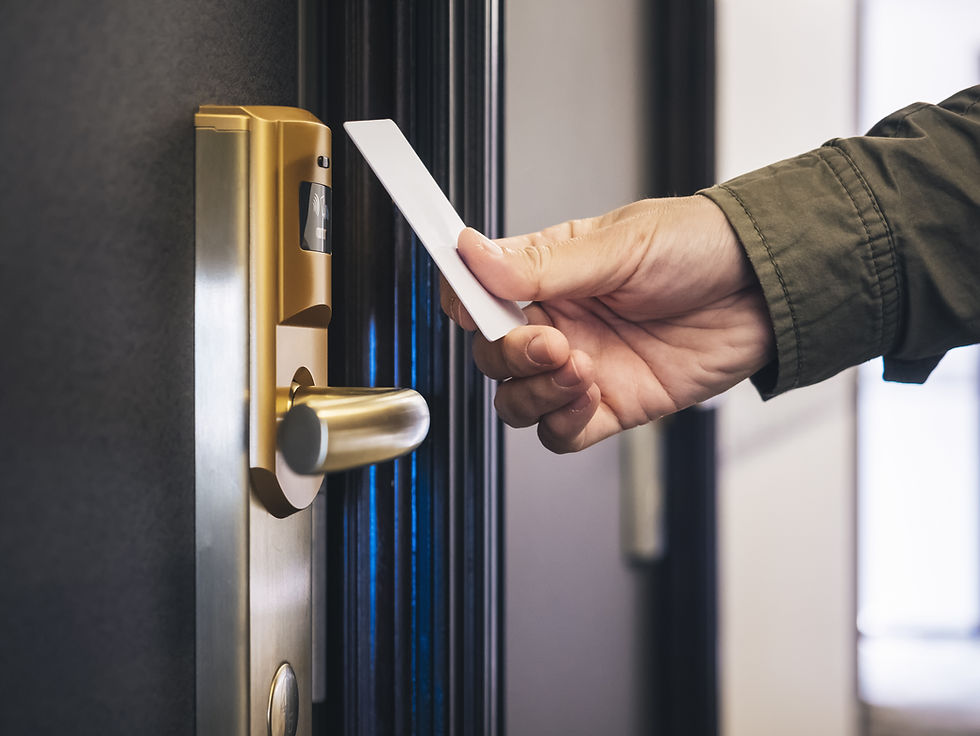
Access control has also become increasingly important, especially for businesses with multiple staff members, contractors, or restricted operational areas. Being able to control and track who enters a premises significantly strengthens overall risk management.
For some businesses, perimeter protection, security lighting, remote monitoring, or integrated systems may also form part of insurer recommendations or requirements.
The Risk of Underestimating Policy Conditions
One of the biggest misconceptions businesses make is assuming that having insurance automatically guarantees payout after an incident.
But insurance policies often include conditions relating to security.
For example:
Was the alarm system active at the time of the incident?
Was the system properly maintained?
Were entry points secured?
Did the business meet agreed security standards outlined in the policy?
If these conditions haven’t been met, insurers may reduce payouts or dispute elements of a claim.
This is where the relationship between business insurance and security becomes critically important.
Security is not simply a preventative measure. It can directly influence the outcome of an insurance claim itself.

Modern Security Expectations Are Changing
Commercial security expectations have evolved significantly over recent years.
Insurers increasingly recognise that older or disconnected systems may no longer provide sufficient protection for modern businesses.
A standalone alarm system that was acceptable ten years ago may no longer reflect current operational risks, particularly for businesses with:
Flexible working arrangements
Multiple access points
High-value equipment
Remote operations
Larger staffing structures
This is why integrated systems combining alarms, CCTV, access control, and remote monitoring are becoming more common across UK commercial properties.
They provide stronger visibility, clearer audit trails, and faster incident verification — all of which support better risk management.
Why Professional Installation Matters
Another area businesses sometimes overlook is the quality and compliance of the installation itself.
Many insurers prefer — or explicitly require — professionally installed systems that meet recognised standards.
This matters because poorly designed systems can create vulnerabilities rather than eliminate them.
Incorrect camera placement, ineffective alarm coverage, unmanaged access permissions, or outdated hardware can all reduce the effectiveness of a security setup.
A professionally designed system ensures that security aligns with both operational realities and potential business insurance requirements.
It also provides businesses with clearer documentation, maintenance records, and servicing history if evidence is ever required by an insurer.
Security Maintenance Is Just As Important
Installing a system is only one part of the process.
Ongoing maintenance and servicing play a major role in ensuring systems remain compliant, operational, and effective.
An alarm system that hasn’t been serviced properly may fail during a critical incident. CCTV cameras with poor image quality or recording issues may provide unusable footage. Access systems with outdated permissions can create internal vulnerabilities.
From an insurance perspective, neglected systems may weaken a business’s ability to demonstrate that reasonable preventative measures were maintained.
This is why regular servicing should be viewed as part of a wider security strategy — not simply an optional extra.
Security as a Long-Term Business Investment
It’s easy to view commercial security purely through the lens of compliance or insurance requirements.
But the wider value is much bigger than that.
Strong security infrastructure can help businesses:
Reduce operational risk
Improve staff safety
Protect stock and assets
Minimise downtime after incidents
Improve accountability across premises
Strengthen customer and stakeholder confidence
And importantly, it creates resilience.
The businesses best protected long-term are usually the ones that treat security as part of operational infrastructure — not just something installed to satisfy an insurance policy.
Every Business Has Different Requirements
There is no universal checklist that applies to every company.
The security needs of:
Warehouses
Offices
Retail spaces
Industrial premises
Hospitality venues
Multi-site operations
…will all differ significantly.
This is why professional assessment matters.
A proper review looks at how your business actually functions day-to-day, identifying vulnerabilities, operational patterns, and areas where security and insurance expectations intersect.
The goal is not simply to install more equipment. It’s to ensure your protection is proportionate, effective, and aligned with risk.
Final Thoughts
The relationship between business insurance and security is becoming increasingly important for modern businesses across the UK.
Insurance providers are placing greater emphasis on preventative measures, system quality, and risk management — and businesses that fail to adapt may leave themselves exposed operationally and financially.
Strong security does more than help protect your premises.
It supports compliance, strengthens resilience, and ensures your business is better positioned if the unexpected happens.
Because when an incident occurs, the real question often becomes not just whether you had insurance — but whether your security met the standard required to support it.
Speak to Rossells
At Rossells, we help businesses design and maintain professional security systems that support both operational protection and wider insurance expectations.
From CCTV and alarms to integrated commercial security solutions, we work with businesses across the UK to create systems tailored to their premises, risk profile, and day-to-day operations.
If you’d like to review your current setup or understand how your security may affect your insurance position, our team is here to help.


Comments